Research · ETH Zurich · Computer Vision Lab · 2021 – 2023
Camera Pose from a Point Cloud
Where was this photo taken? Matching pixels directly to 3D points.
- 5.75 / 6thesis grade
- WO2023186262A1international patent application
- 6Dcamera pose, from one image and one point cloud
Master's thesis at ETH Zurich's Computer Vision Lab. Image and point-cloud features are learned jointly so that a single photo can be registered against a 3D scan to recover the camera's 6D pose. The method was filed as an international patent application.
The problem
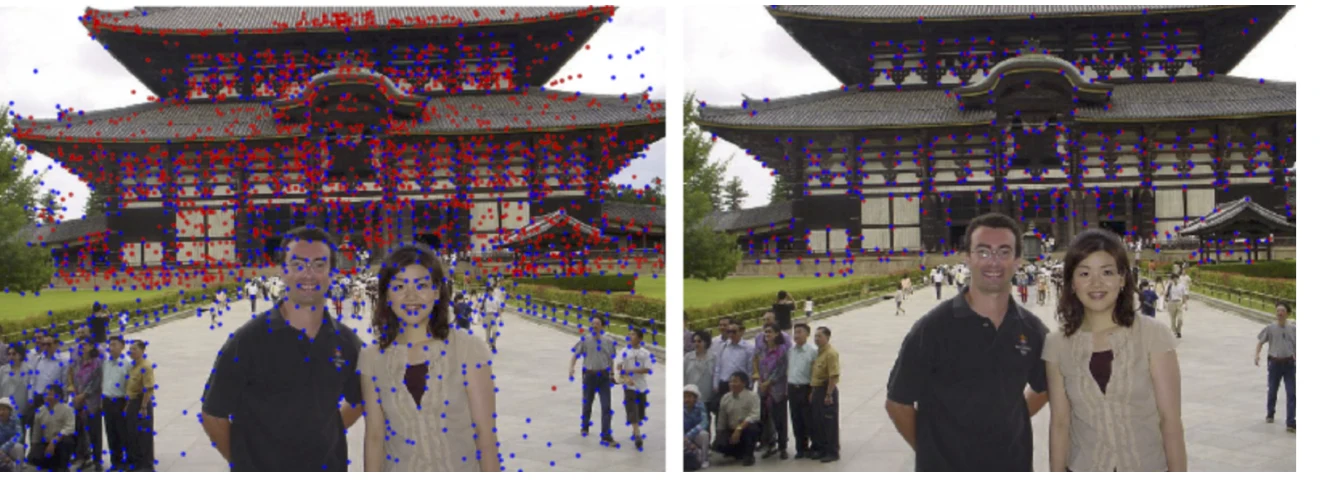
Given a 3D scan of a place and a single photograph, where was the camera? Solving it means finding which pixels correspond to which 3D points, and images and point clouds look nothing alike. Classical pipelines avoid the question by matching images to other images. When all you have is a point cloud, that route is closed. Recovering pose without known correspondences is the blind Perspective-n-Point problem.
The approach
Learn features for both worlds at once, end to end.
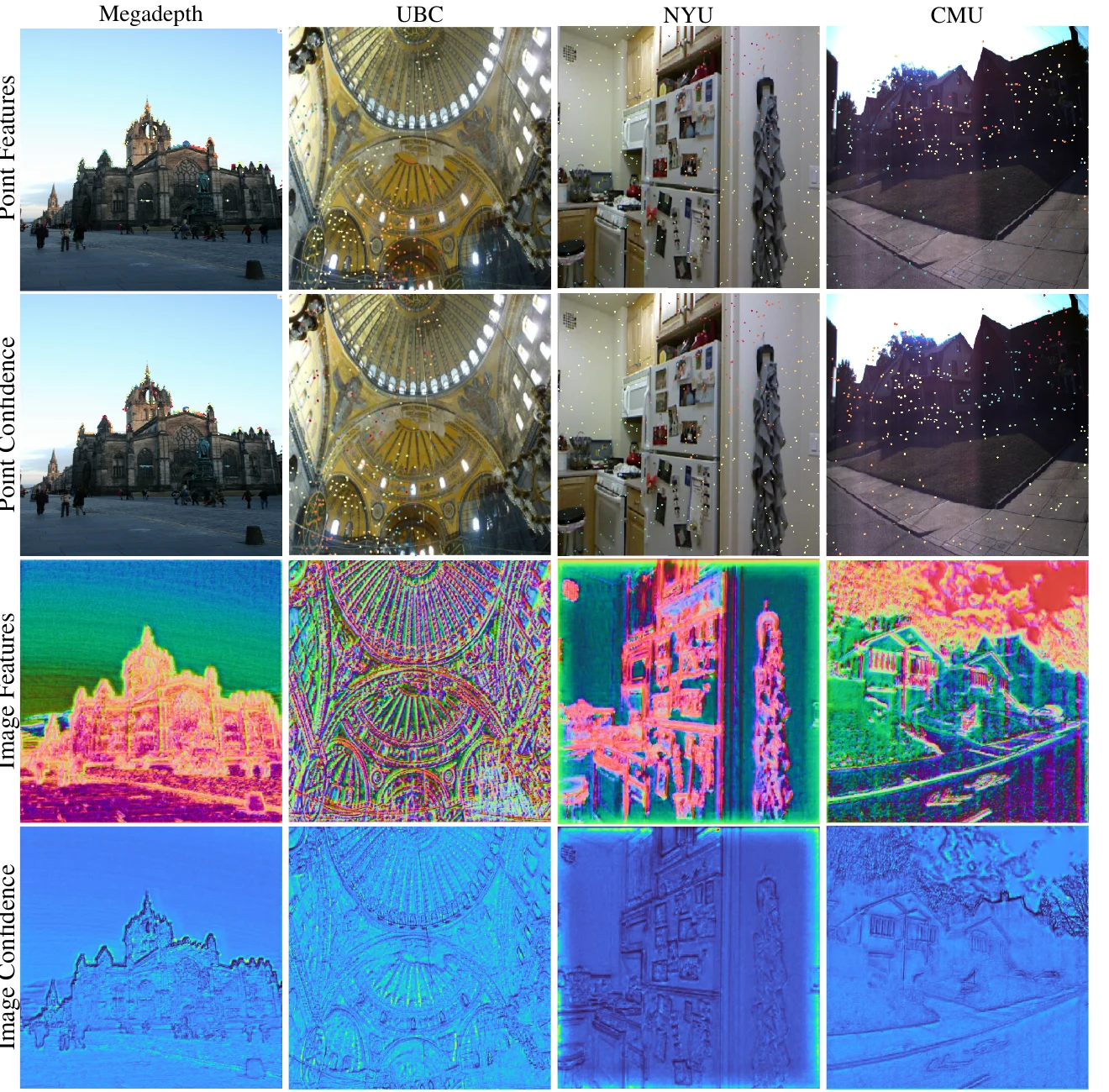
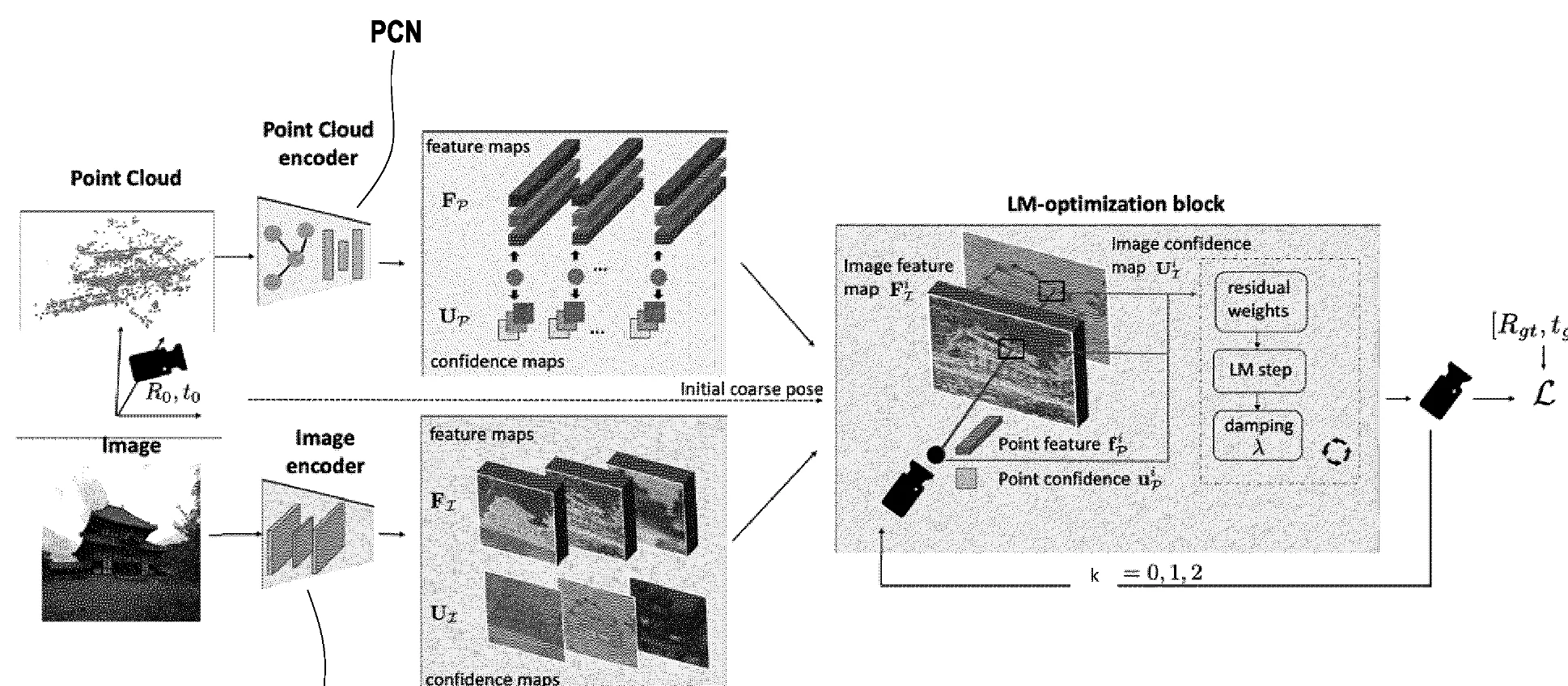
- Two encoders, one for the image and one for the point cloud, produce multi-level feature maps together with confidence maps that say where the features can be trusted.
- A differentiable Levenberg–Marquardt block aligns the two by optimising the camera pose directly, from a coarse level to a fine one.
- Only the pose is supervised. The network discovers on its own which visual features are robust enough to match across the two modalities.
Result
The method improved on the blind PnP benchmark and was competitive on localisation. The experiments also showed something useful about the modalities: image data is essential for blind PnP, while point clouds carry the features that matter for localisation.
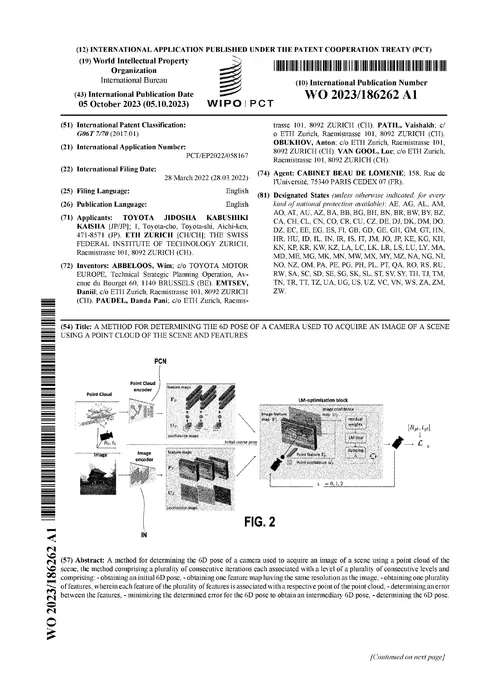
The thesis was supervised by Prof. Luc Van Gool and advised by Dr. Danda Pani Paudel, Vaishakh Patil and Anton Obukhov. It was graded 5.75 out of 6 and led to the international patent application A method for determining the 6D pose of a camera used to acquire an image of a scene using a point cloud of the scene and features.
Documents
Figures